

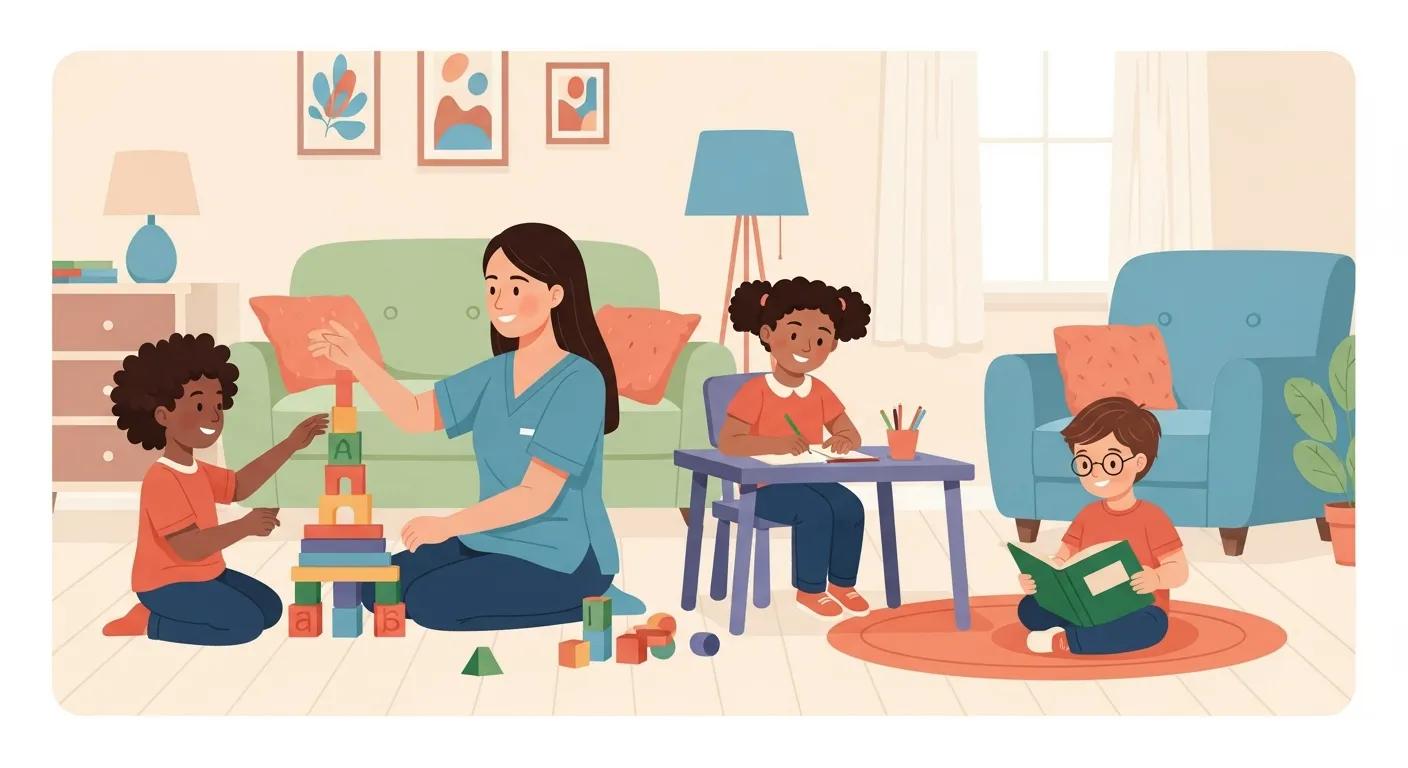
Local In-Home ABA Therapy Benefits
In-home ABA therapy supports children with autism and other developmental challenges within their own homes. It delivers individualized care and integrates family participation, making it an effective option for early intervention. Parents seeking proven ways to support development can use in-home ABA as a structured, evidence-based path to measurable progress. This article outlines the key benefits, age-specific approaches, session expectations, and how families can enroll in these services.
Extensive research shows clear benefits of comprehensive behavioral intervention, particularly when it is delivered in the home.
Advantages of Home-Based ABA Intervention for Autism
Researchers have demonstrated that comprehensive behavioral intervention can result in significant improvements in the lives of individuals diagnosed with autism spectrum disorder (ASD; e.g.; Lovaas, Journal of Consulting and Clinical Psychology 55(1):3–9,1987; McEachin et al., American Journal of Mental Retardation 97(4):359–372,1993). This intervention has occurred in a variety of settings (e.g., school, home, and clinic). Even though procedures based upon the principles of applied behavior analysis (ABA) can be implemented across a variety of settings, there is often confusion about the differences and relative advantages of home- versus clinic-based settings. The purpose of this paper is to provide a discussion of home- and clinic-based intervention within the context of a progressive approach to ABA and discus possible advantages of each type of setting.
Advantages and challenges of a home-and clinic-based model of behavioral intervention for individuals diagnosed with autism spectrum disorder, JB Leaf, 2018
What Are the Key Benefits of In-Home ABA Therapy for Children?

In-home ABA therapy offers targeted advantages tailored to children with autism. The primary benefits are:
- Natural Environment for Therapy: Conducting sessions at home allows children to learn in a familiar setting, which can reduce anxiety and promote engagement.
- Individualized Focus on Child Needs: Therapists can tailor interventions to meet the unique developmental goals of each child, ensuring that therapy is relevant and effective.
- Increased Family Involvement: Family members can participate in sessions, enhancing their understanding of the therapy and enabling them to support their child’s progress outside of formal sessions.
Together, these benefits demonstrate how in-home ABA creates a supportive, functional learning environment for children.
How Does In-Home ABA Therapy Support Early Childhood Development?
In-home ABA supports early development by increasing helpful behaviours and applying positive reinforcement. Therapists target communication, social interaction, and self-regulation. Working closely with a trained ABA therapist helps children reach important developmental milestones during these formative years.
What Evidence-Based Outcomes Demonstrate ABA Therapy Effectiveness?
Clinical studies show that ABA improves communication, social skills, and adaptive behaviours in many children with autism. Therapists use data-driven tracking to monitor progress and adjust interventions as needs change, keeping therapy focused and effective.
Additional research underscores the positive impact of early and consistent ABA therapy for children with autism spectrum disorder.
Beneficial Outcomes of Early In-Home ABA Therapy for ASD
Rising numbers in Autism Spectrum Disorder (ASD) diagnoses lead to concerns about resources and personnel to support these children in home and school settings. Early intervention and ABA therapy has been demonstrated to show the most beneficial outcomes for children diagnosed with ASD (Peters-Scheffer et al., 2011, Eikeseth et al., 2007).
Effect of Natural Environment Training and Discrete Trial Training on Adaptive Behaviors, A Yanchik, 2021
How Is ABA Therapy Tailored for Different Age Groups at Home?
ABA is not one-size-fits-all. Clinicians customise interventions to each child’s developmental stage to ensure the approach is appropriate and effective.
What Are the Specific Approaches for Toddlers in ABA Therapy?
For toddlers, ABA targets foundational skills such as language, social interaction, and play. Therapists use modelling, visual supports, and play-based methods to make learning engaging and practical.
How Does Early Intervention ABA Therapy Address Infant Needs?
For infants, early ABA emphasises communication and social engagement. Therapists coach families to build routines and interactions that support bonding and early social-emotional development, which can improve outcomes as the child grows.
What Should Parents Expect During In-Home Behavioral Therapy Sessions?

Parents are essential to the success of in-home ABA. Understanding session structure and goals helps families maximise therapy benefits.
How Are ABA Therapy Sessions Structured in a Home Setting?
ABA sessions follow a structured plan that combines direct instruction, play-based activities, and parent coaching. Sessions typically last 60–90 minutes, allowing time for skill practice and goal-directed work. The therapist focuses each session on the child’s individualized goals to ensure productive progress.
What Role Do Parents Play in Supporting Therapy Progress?
Parents are asked to participate in sessions and apply strategies in daily routines. This practice reinforces skills and empowers parents to support progress. Workshops and training further strengthen parents’ understanding of ABA methods.
How Can Families Schedule and Enroll in Autism Home Therapy Services?
Scheduling and enrolling in in-home ABA services is straightforward and begins with an initial consultation.
What Is the Process for Scheduling In-Home ABA Therapy in Metro Atlanta?
Families can contact a provider to schedule an initial consultation. A Board Certified Behavior Analyst (BCBA) will assess skills, identify needs, and develop a personalized treatment plan. Providers typically verify insurance benefits to clarify coverage for services.
How Does Chroma Early Start Ensure Family-Centered Care?
Chroma Early Start involves parents at every step, offers flexible service settings, and emphasises parent empowerment. This family-centered approach keeps families informed and supports more effective therapy outcomes.
Frequently Asked Questions
What qualifications should I look for in an ABA therapist for in-home therapy?
Look for BCBA certification to ensure rigorous training in applied behavior analysis. Also consider experience with children with autism, the ability to individualize interventions, clear communication, and a collaborative approach with families.
How can I track my child’s progress in ABA therapy?
Track progress through regular communication and review of session data. Therapists use measurable metrics to monitor gains in communication, social skills, and behaviour. Parents can keep a home log and meet regularly with the therapist to review data and update goals.
What are some common challenges families face with in-home ABA therapy?
Common challenges include scheduling conflicts, a child’s resistance, and inconsistent strategy implementation. Parents may also feel overwhelmed by new techniques. Open communication and seeking support from the therapist help address these issues; a strong partnership improves outcomes.
How can siblings be involved in the ABA therapy process?
Siblings can support the process by joining sessions and learning techniques. Inclusion helps siblings understand needs, reinforces skills through shared play, and builds empathy. Therapists can coach siblings on appropriate ways to engage and reinforce learning.
What should I do if I notice no progress in my child’s ABA therapy?
If progress stalls, raise your concerns with the therapist. They can review the treatment plan and make adjustments. Progress may be gradual and depends on engagement and consistent practice; collaborating with the team helps set realistic goals and next steps.
Are there any specific resources for parents to learn more about ABA therapy?
Reliable resources include the Association for Behavior Analysis International (ABAI) and the Autism Society, which offer guides, webinars, and workshops. Local support groups, online forums, and expert-authored books and articles also provide practical information for parents.
Conclusion
In-home ABA therapy delivers individualized attention in a familiar environment and integrates family involvement to strengthen outcomes. This tailored approach can produce meaningful improvements in a child’s skills and overall well-being. Contact us today to learn more about enrolling in these services.