


Mastering Functional Behavior Assessment
Functional Behavior Assessment (FBA) is an evidence-informed process for identifying the causes of challenging behaviors in children. By understanding those causes, clinicians and parents design targeted intervention strategies that improve functioning and learning. This article explains the role of FBA in early childhood settings, summarizes core steps and benefits, and describes how families and staff collaborate to implement assessments and plans.
What Is Functional Behavior Assessment and Why Is It Important?
Functional Behavior Assessment (FBA) identifies specific behaviors, the events that trigger them, and the functions those behaviors serve. In early childhood education, that insight directs supports that address root causes rather than only managing symptoms. Pinpointing antecedents and consequences lets staff design strategies that reduce problem behaviour and support learning.
Chroma Early Start embeds FBA in its programs so children receive timely, appropriate support within a calm, nurturing learning environment.
Research increasingly documents the use of FBA across educational settings and a growing evidence base for its methods.
FBA Practices and Methods in School Settings
Functional behavior assessment is becoming a commonly used practice in school settings. Accompanying this growth has been an increase in research on functional behavior assessment. We reviewed the extant literature on documenting indirect and direct methods of functional behavior assessment in school settings.
Functional behavior assessment in schools: Current status and future directions, CM Anderson, 2015
How Does FBA Identify Behavior Triggers and Functions?
FBA uncovers triggers and functions through systematic observation and targeted data collection. Trained staff observe the child across settings, recording when and where a behaviour occurs and the surrounding events. They analyse routines, social interactions, and environmental factors to build a concise picture of the behaviour’s context.
For example, disruptive behavior during group tasks may reflect disengagement or lack of understanding. Identifying that trigger lets clinicians adjust tasks or provide supports to boost engagement and reduce the behaviour.
What Are the Benefits of Early FBA in Child Development?
Early FBA provides measurable benefits. Key advantages include:
- Improved communication: Clear hypotheses let practitioners teach alternative, functional ways for the child to express needs.
- Stronger social connections: Targeted supports reduce isolating behaviours and promote positive peer interactions.
- Better daily participation readiness: Early intervention equips children with skills to handle social and group setting demands.
Together these outcomes foster a supportive learning environment and sustainable behaviour change.
What Are the Key Steps in Conducting a Functional Behavior Assessment?
Conducting an FBA follows a systematic sequence that yields actionable findings. Typical steps include:
- Identifying the behavior: Precisely define the behaviour to be assessed.
- Data collection: Gather observations, interviews, and rating-scale data.
- Analysis: Look for patterns and likely triggers.
- Developing hypotheses: State testable ideas about the behaviour’s function.
- Testing hypotheses: Implement and monitor interventions to verify hypotheses and measure change.
These steps create a reliable framework for diagnosing and addressing challenging behaviours.
How Is Behavior Data Collected and Analyzed?
Behavior data come from direct observation, structured interviews with parents and clinicians, and validated rating scales. Observations across multiple contexts capture a fuller view of behaviour.
Practitioners analyse trends in antecedents and consequences; for example, repeated problems during transitions often indicate a need for clearer routines or additional supports at those times.
Who Performs the FBA and What Tools Are Used?
Trained professionals—special education clinicians, school psychologists, and behaviour analysts—typically conduct functional assessments. They use standardised tools and procedures to ensure reliability. Common instruments include:
- Behavior rating scales: Standard questionnaires measuring frequency and intensity.
- Direct observation checklists: Structured guides for recording behaviours and context.
- Interviews: Systematic discussions with parents, clinicians, and, when appropriate, the child.
These tools support a comprehensive assessment and inform evidence-based intervention planning. Research generally supports direct observation and advises caution when relying on indirect measures alone.
FBA Methodologies for Young Children with Behavioral Disorders
The use of functional behavior assessment (FBA) to guide the development of behavior intervention plans continues to increase since they were first mandated in IDEA (Individuals with Disabilities Education Act Amendments of 1997, 20 U.S.C. Section 1400 et seq, 1997). A variety of indirect and direct instruments have been developed to facilitate this process. This investigation examined the correspondence between indirect and direct FBA procedures. Specifically, the results of three descriptive assessments and a functional analysis for four young children at risk for emotional and behavioral disorders were compared. These results support the use of direct observations and indicate that indirect measures should be used with caution as stand-alone assessments of the function of challenging behaviors.
A comparison of functional behavior assessment methodologies with young children: Descriptive methods and functional analysis, MA Conroy, 2008
How Are Behavior Intervention Plans Developed from FBA Results?

Behavior intervention plans (BIPs) translate FBA findings into practical supports. A BIP specifies strategies that address the identified function(s) and sets the framework for consistent implementation.
Developing a BIP is collaborative—clinicians, parents, and specialists work together to ensure the plan is feasible and aligned. Typical components include:
- Specific goals: Measurable targets for progress.
- Intervention strategies: Concrete, tailored supports.
- Monitoring procedures: Ways to track progress and assess effectiveness.
Aligning the BIP with FBA insights produces targeted supports that respect a child’s strengths. The goal is sustainable behaviour change that generalises across settings.
FBA for Sustained Behavior Change in Schools
School practitioners increasingly use functional behavior assessments to design behavior intervention plans when students engage in challenging behavior that is not improved by group setting management or standard interventions. Behavior intervention plans should aim to produce behavior change that maintains across time and generalizes to relevant contexts.
Maintenance and generalization in functional behavior assessment/behavior intervention plan literature, J Simacek, 2019
What Applied Behavior Analysis Techniques Support Intervention?
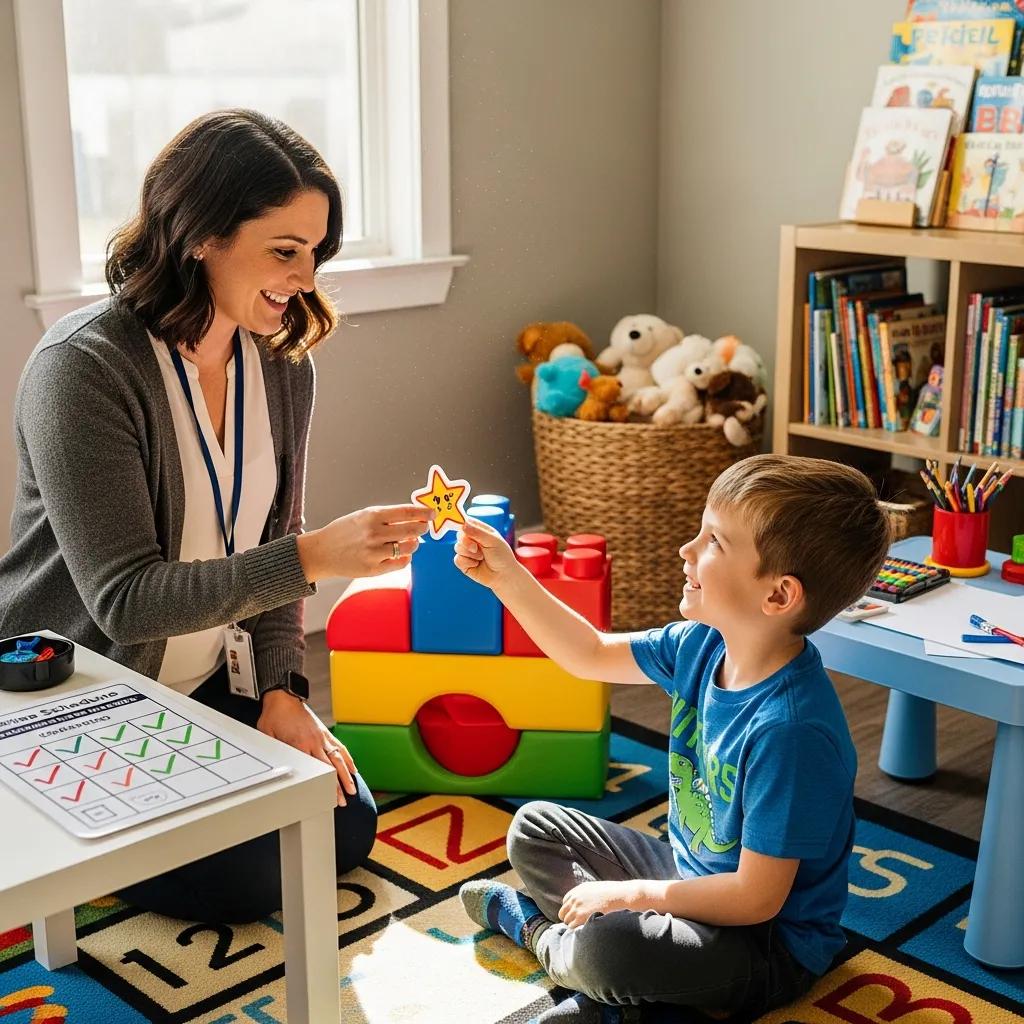
Applied Behavior Analysis (ABA) techniques commonly support FBA-guided interventions. Effective methods include:
- Positive reinforcement: Rewarding desired behaviours to increase them.
- Modeling: Demonstrating appropriate behaviours for the child to imitate.
- Prompting: Using and fading cues to encourage correct responses.
These techniques are grounded in behavioural science and aim for measurable, positive changes through consistent reinforcement.
How Do Intervention Plans Address Specific Behavior Functions?
Intervention plans target the functions identified by the FBA. For example, if a child seeks attention via disruptive actions, the plan increases positive attention for appropriate behaviour while reducing reinforcement for the disruptive behaviour.
This function-based approach improves relevance and effectiveness and helps create a more responsive learning environment.
What Roles Do Parents and Clinicians Play in Functional Behavior Assessment?
Parents and clinicians provide essential perspectives and continuity for the FBA process. Their collaboration ensures thorough data collection, consistent implementation, and ongoing evaluation of outcomes.
How Can Parents Engage in Behavior Assessment and Support?
Parents can engage in the FBA process by:
- Providing insight: Reporting observations across home and social contexts.
- Participating in meetings: Joining planning sessions to align goals and strategies.
- Implementing strategies: Applying agreed interventions at home to reinforce progress.
Active parent involvement improves assessment accuracy and the likelihood of sustained positive change.
What Strategies Do Clinicians Use to Implement FBA-Based Interventions?
Clinicians use strategies such as:
- Collaborative planning: Co-designing supports with families and specialists.
- Data monitoring: Regularly tracking outcomes and adjusting interventions.
- Professional development: Training to maintain evidence-based behaviour support practices.
These practices help clinicians deliver consistent, informed support and foster positive group setting climates.
Frequently Asked Questions
What are the common misconceptions about Functional Behavior Assessment (FBA)?
A common misconception is that FBA only identifies negative behaviours. It actually examines both challenging and adaptive behaviours to inform supports. Another misconception is that FBA is only for severe cases; early, targeted assessment prevents escalation and supports learning. Clarifying these points helps teams use FBA more effectively.
How can technology assist in the FBA process?
Technology streamlines FBA by enabling real-time data collection, secure records, and automated trend reports. Digital tools make it easier for teams to share observations, visualise patterns, and monitor intervention effects over time, supporting timely, data-driven decisions.
What role does training play in the effectiveness of FBA?
Training is essential. Clinicians and specialists need skills in behaviour analysis, objective data collection, and intervention design. Ongoing professional development ensures validated methods are applied and data are interpreted accurately.
How can FBA be integrated into a school-wide behavior management system?
Integration requires standardised protocols, staff training, and referral systems. Embedding FBA findings into school policies and group setting practices creates consistency and ensures students receive appropriate supports across settings.
What are the ethical considerations when conducting an FBA?
Ethical FBA practice respects the child’s dignity and privacy. Teams should obtain informed consent, use data only for planning, and apply culturally responsive methods. Safeguarding sensitive information and involving families are central ethical duties.
How can parents support the FBA process at home?
Parents support FBA by sharing observations, attending planning meetings, and implementing consistent strategies. Consistency between home and school reinforces learning and helps the child generalise skills across environments.
Conclusion
Implementing Functional Behavior Assessment provides a systematic, evidence-based way to understand and address challenging behaviours. By identifying triggers and designing targeted interventions, parents and clinicians can improve communication, social skills, and daily participation readiness. Collaborative, data-driven practice supports lasting, generalised behaviour change and better developmental outcomes for children.