

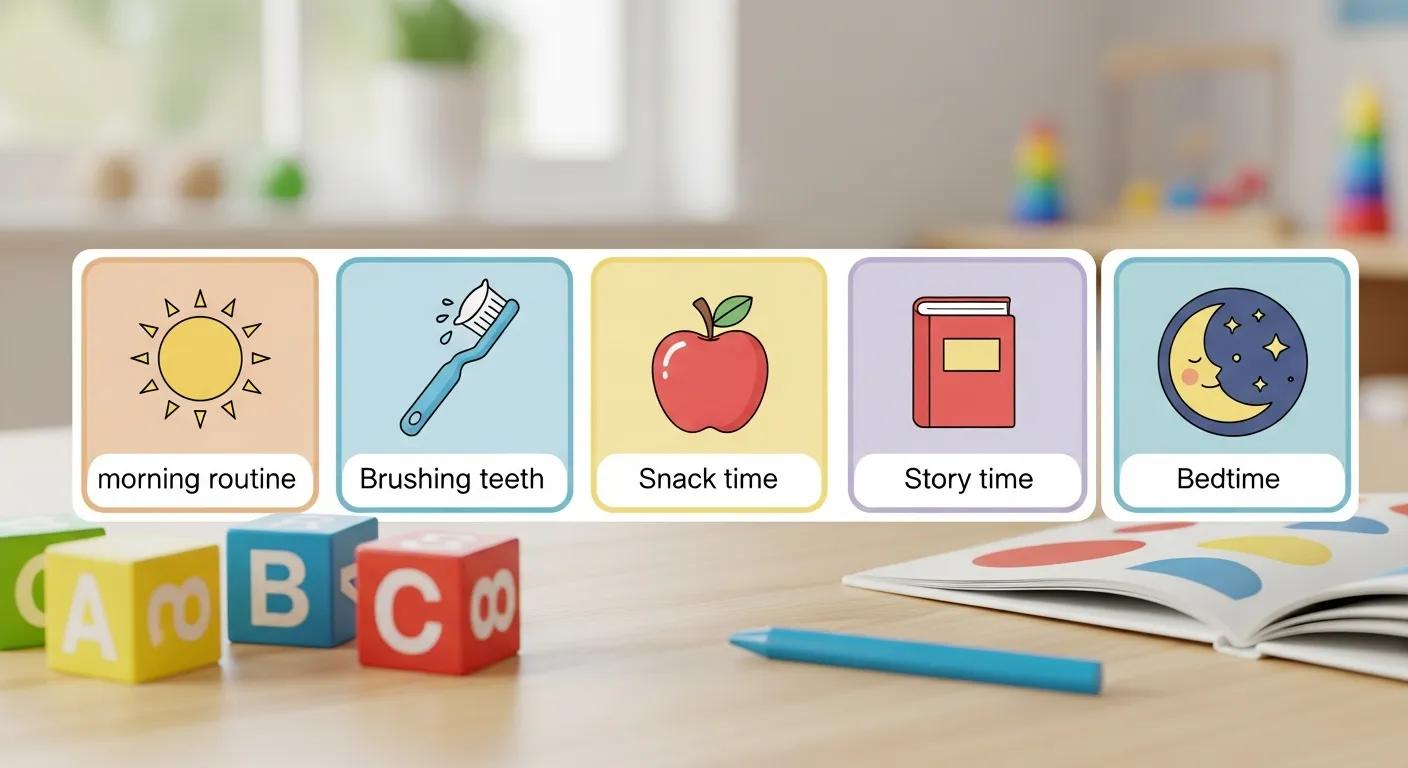
Visual Schedules for Early Learning
Visual schedules and supports are core tools in early childhood education, especially for children with autism spectrum disorder (ASD) and other developmental needs. These visual aids clarify routines, strengthen communication, and promote independence. When clinicians use visual supports, they create a structured, predictable environment that helps children engage and learn. This article explains what visual supports are, their benefits, practical implementation strategies, the role of social stories, and advantages for pediatric therapy programs.
What Are Visual Supports and How Do They Aid Children with Autism?
Visual supports use images, symbols, or words to present information and make environments more understandable. They turn abstract instructions into concrete cues, improving comprehension and reducing anxiety. Clear visuals help children follow routines, anticipate transitions, and respond to expectations more consistently.
Defining Visual Supports and Their Role in Early Childhood Education
Examples of visual supports include picture schedules, visual cues, and social stories. A visual schedule lays out daily activities so children can anticipate the sequence of events. Integrating these tools promotes inclusion by addressing diverse learning needs and increasing engagement.
How Visual Supports Improve Communication and Routine Adherence
Visuals give children a stable reference for instructions and expectations, which eases transitions and reduces resistance. By showing task sequences, supports make routines more accessible and help children build independence as they learn to use cues to navigate their day.
How Can Visual Schedules Be Effectively Implemented for Early Learners?
Effective visual schedules are planned to match each child’s developmental profile. A clear, well-organized schedule reduces uncertainty, supports predictable expectations, and promotes skill development.
Step-by-Step Guide to Creating Visual Schedules for Toddlers

- Identify Key Activities: List essential daily activities such as circle time, snack, and playtime.
- Select Visuals: Use clear photographs, drawings, or icons that represent each activity.
- Arrange Sequentially: Order visuals to match the day’s flow and mark transitions.
- Display Prominently: Place schedules where children can easily see and use them.
- Review Regularly: Go over the schedule with children to build familiarity and independence.
Tailoring Visual Schedules to Individual Developmental Needs
Customize visuals to each child’s comprehension. Some children need simple images; others do better with more detail. Observe how each child uses the schedule and adjust visuals, language, and pacing so the supports remain effective and inclusive.
What Are Social Stories and How Do They Support Child Development?
Social stories are short narratives that describe social situations and expected responses. They prepare children for interactions by providing clear examples of behaviors and reactions, helping them anticipate events and practice appropriate responses.
Understanding Social Stories as a Communication Tool
Social stories break social situations into manageable parts—setting, characters, actions, and feelings—so children can rehearse responses to scenarios like sharing or asking for help. Repeated reading supports social skill development and smoother interactions with peers and adults.
Practical Examples of Social Stories in Early Learning Settings

Social stories can prepare children for specific events—visiting the doctor, taking turns, or other common routines—by explaining what will happen and suggesting appropriate behavior. These targeted narratives support communication and encourage positive social interaction.
What Are the Benefits of Using Visual Supports in Early Learning Programs?
Visual supports improve communication, support routine adherence, and reduce anxiety for children with autism and other developmental challenges. They create clearer learning environments that help children focus and participate.
Evidence-Based Outcomes: Routine Adherence and Anxiety Reduction
Research shows that visual schedules help children follow routines and experience less stress during transitions. These supports contribute to better behavioral outcomes and overall well-being by making expectations more predictable and manageable.
Further studies emphasize that visual schedules are effective for managing transitions and reducing behavioral challenges among young children with ASD.
Visual Schedules for ASD Young Children: Managing Transitions
This paper explores the use of visual schedules to support students diagnosed with Autism Spectrum Disorder with transitions throughout the school day. Students diagnosed with Autism Spectrum Disorder have a tough time interpreting verbal directions throughout the school day; therefore, there is an increase in student behaviors during transitions (Dettmer, Simpson, Brenda, & Ganz, 2000). The students utilized in this study are early childhood therapy aged students, which means they are between the ages of three to five. All students are in an integrated early childhood therapy group setting. The researcher implemented and created individualized visual schedules for each student in this paper. The researcher collected data and analyzed the data to determine the effects individualized visual schedules have on behaviors displayed during transitions throughout the school day. This paper explores whether individualized visual schedules can be used as an intervention to reduce the number of behaviors display
The use of visual schedules, 2017
How Chroma Early Start Integrates Visual Supports Locally
Chroma Early Start embeds visual schedules into its clinical framework through individual assessment and daily routines. This individualized approach supports learning and behaviour, benefits children with autism, and enhances the group setting experience for all students. Chroma’s use of visual supports follows recognized best practices in early childhood education.
Frequently Asked Questions
1. What types of visual supports are most effective for children with autism?
Picture schedules, visual cues, and social stories are commonly effective; the best choice depends on the child’s needs and comprehension.
2. How can parents reinforce the use of visual schedules at home?
Parents can create a consistent home schedule that mirrors group routines, review it with the child, and praise independent use to reinforce habits.
3. Are there specific training programs for clinicians on using visual supports?
Yes. Workshops, online courses, and professional development in special education teach clinicians to create individualized schedules and integrate visual aids.
4. How do visual supports benefit children without developmental challenges?
They clarify expectations, ease transitions, support language development, and promote independence for all children.
5. What role do parents play in the development of social stories for their children?
Parents help identify challenging situations, provide familiar details, and read or practice stories with the child to reinforce learning.
6. How can visual supports be adapted for children with varying levels of understanding?
Adjust visual complexity and text to match each child’s comprehension and use observation and feedback to refine supports.
7. What are some common challenges clinicians face when implementing visual supports?
Challenges include initial resistance, time to individualize schedules, and limited resources or training; these can be addressed with professional development and family collaboration.
Conclusion
Visual supports in pediatric therapy improve communication, increase routine adherence, and reduce anxiety—especially for children with autism. By pairing visual schedules with social stories and tailoring supports to each child, clinicians can foster independence and stronger learning outcomes. Consider integrating these strategies into your group setting to support diverse developmental needs.